In October 2026, Techquity's SEO Lead, Dena Warren, took to the stage at Brighton SEO to deliver her conference talk: Migrations without the traffic cliff dive. Speaking on the event's dedicated migration track, Dena shared what Techquity has learned from planning, building and launching website migrations as a development agency, and how businesses can protect their organic traffic when they change platform, redesign or restructure their site.
What is BrightonSEO?
Brighton SEO is the world’s largest search marketing conference. Held twice a year in Brighton and once a year in San Diego, it brings together thousands of SEO, content and digital marketing professionals, from in-house teams at major brands to agencies and independent consultants. Speaking slots are competitive, and talks are expected to share practical, experience-led insight that attendees can put to work straight away.
About the speaker
Dena Warren is the SEO Lead at Techquity, with six years of ecommerce SEO experience. Working inside a development agency means she sits between the SEO strategy and the build itself, which is exactly where most migrations succeed or fail.
What the talk covered
Dena opened with a line many businesses will recognise after a new website goes live: "We did the redirects. So why did traffic fall?"
Her answer was that a migration is not a launch day, it's a process. Using a five-stage structure of Plan, Prep, Test, Launch and Monitor, she walked through where migrations typically go wrong and the processes Techquity now uses to prevent it.
Key takeaways
1. A redirect map has to survive in practice
A redirect map can look perfect on paper and still fail once the new site is crawled. Dena highlighted the most common problems Techquity finds when inheriting a migration done elsewhere:
Redirect chains and loops, where an old URL hops through several others before reaching its destination, wasting crawl budget and diluting ranking signals.
Parameters, filters and faceted URLs left out of the map entirely.
Redirects that were mapped but never implemented, such as trailing slashes and special characters.
Out of stock and discontinued products, which need a clear decision: redirect to the closest equivalent, keep live if temporarily unavailable, or remove with a 404.
Every map should be tested before launch, and where time is limited, prioritised by revenue, backlinks and clicks.
2. Benchmark before launch, monitor after
Without a record of the old site's titles, canonicals, hreflang, robots rules and internal links, teams end up rebuilding from cached pages, the Wayback Machine and old sitemaps. A proper baseline before launch avoids this.
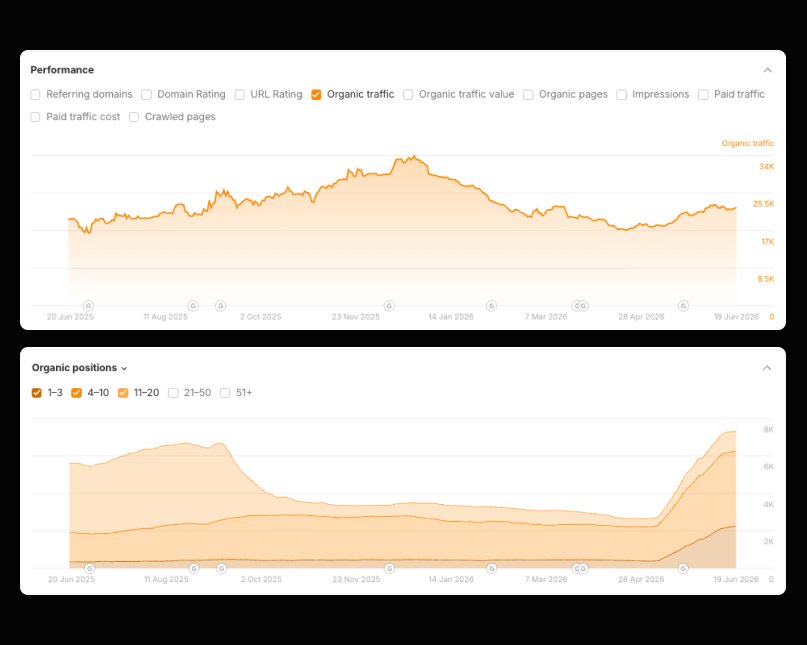
After launch, the challenge is telling real problems from normal fluctuation. Using real ranking data, Dena showed one drop that settled on its own and one that needed action, and the four checkpoints that Techquity uses at set points to catch issues sooner: errors, indexing, rankings and traffic.
3. Clear communication protects the project
Many projects that affect SEO aren't called migrations at all. "We're just changing the menu" can mean an internal linking restructure. "We're upgrading the CMS" can mean losing fields the site depends on.
To keep clients informed when the numbers move, Techquity uses a simple framework for every update:
What we see
What it means
What we're doing
When we'll know
And even when SEO is brought in late, there is still value to add: early on it can improve the project, mid-build it can protect it, and after launch it can triage it.
4. Launch lessons nobody skips on purpose
The staging leak: a staging site's "block everything" robots.txt making its way onto the live site.
Frozen export, live edits: content exported for migration while the team keeps editing the old site.
Manual in the old CMS, automated in the new one: settings that were set by hand now default to something else.
Not in the ticket, not in the build: if SEO requirements aren't written into the development tickets and acceptance criteria, they don't get built.
The talk closed with Techquity's full migration and post-migration checklists, available in the slides.
What Techquity brought back from the conference
Alongside speaking, Dena took in talks from across the event. There are insights from key talks that the team is already applying to work, such as migrations at enterprise level, avoiding crawl bloat, how AI search is evolving, and the psychology of the search engine results pages.
Planning a migration?
Whether you're replatforming, redesigning or restructuring an ecommerce site, Techquity brings SEO and development together from day one, so migrations are planned, built and tested with search in mind.
Get in touch with the Techquity team to talk about your project.